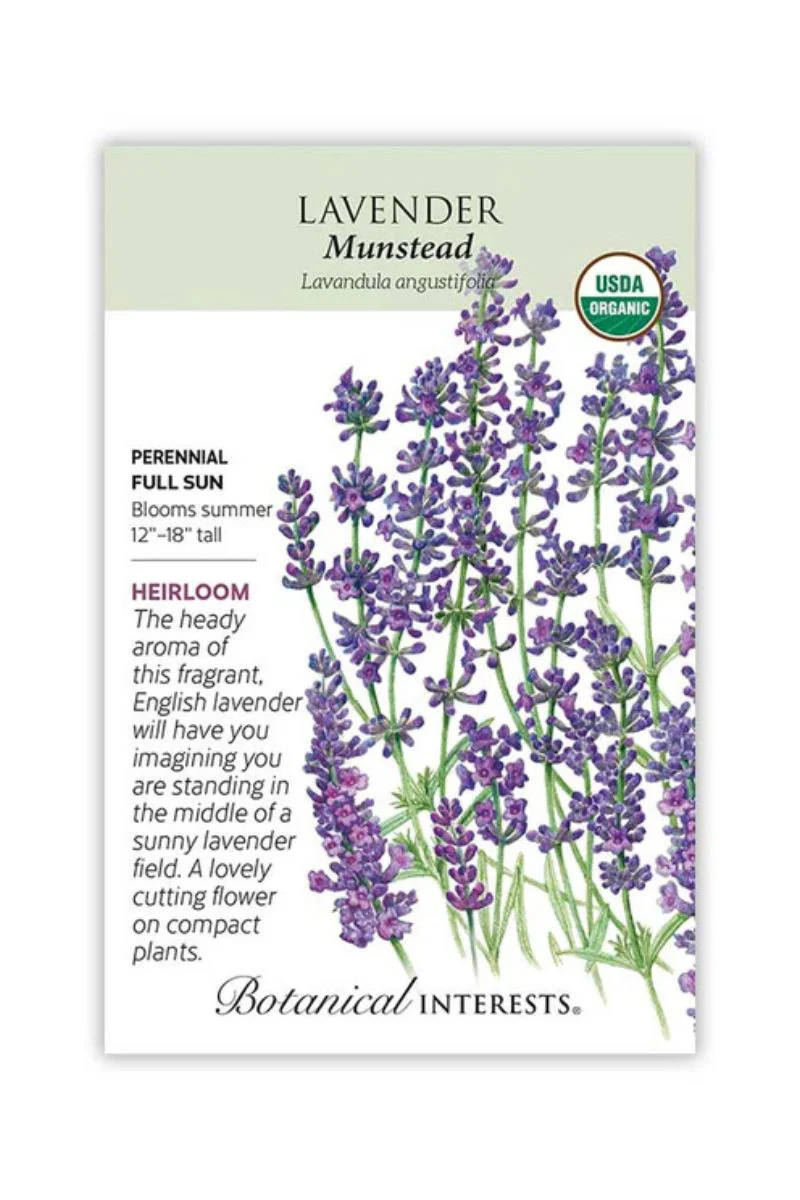
Botanical Interests Munstead Lavender Organic Seeds
Introduced in 1916, 'Munstead' was named for Munstead Woods in England where it was a favorite of renowned garden designer, writer, and artist, Gertrude Jekyll. 'Munstead' flowers earlier than other lavenders and stays compact. English lavenders are preferred for culinary uses and oils. Heat- and drought-tolerant plants attract pollinators. Add the flowers to a simple syrup to make craft cocktails/mocktails or lavender lemonade. Bake into bread, cookies, or scones, and flavor jellies. Perennial in USDA zones 5-9.
When to Sow Outside: 4 to 6 weeks before your average last frost date, as soon as soil can be worked, or late fall in any climate.
When to Start Inside: RECOMMENDED. 10 to 12 weeks before your average last frost date. Transplant seedlings after your average last frost date.
Days to Emerge: 15–90 Days
Seed Spacing: Surface to ⅛"
Thinning: When 1" tall, thin to 1 every 18"–24"
Original: $2.99
-70%$2.99
$0.90Product Information
Product Information
Shipping & Returns
Shipping & Returns
Description
Introduced in 1916, 'Munstead' was named for Munstead Woods in England where it was a favorite of renowned garden designer, writer, and artist, Gertrude Jekyll. 'Munstead' flowers earlier than other lavenders and stays compact. English lavenders are preferred for culinary uses and oils. Heat- and drought-tolerant plants attract pollinators. Add the flowers to a simple syrup to make craft cocktails/mocktails or lavender lemonade. Bake into bread, cookies, or scones, and flavor jellies. Perennial in USDA zones 5-9.
When to Sow Outside: 4 to 6 weeks before your average last frost date, as soon as soil can be worked, or late fall in any climate.
When to Start Inside: RECOMMENDED. 10 to 12 weeks before your average last frost date. Transplant seedlings after your average last frost date.
Days to Emerge: 15–90 Days
Seed Spacing: Surface to ⅛"
Thinning: When 1" tall, thin to 1 every 18"–24"